
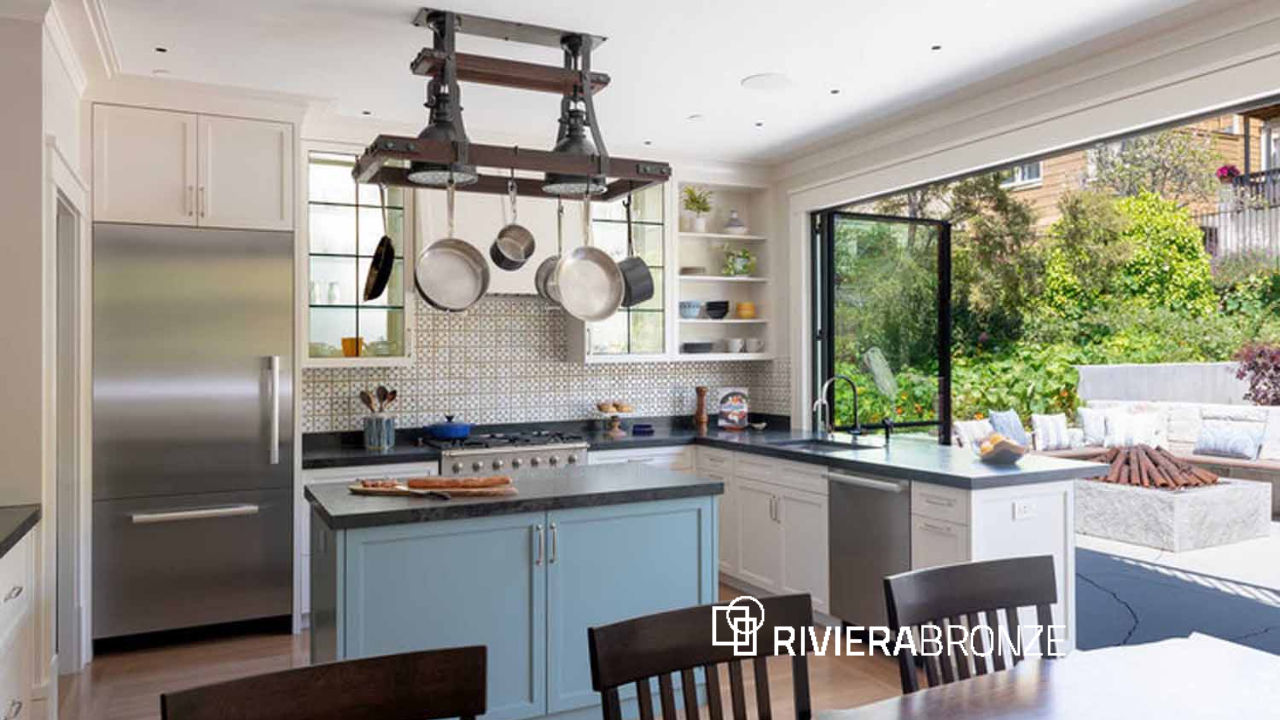
In luxury residential architecture, the line between indoors and outdoors has become more of a conversation than a boundary. Today’s homeowners expect their homes to breathe—to extend outward, capture views, and celebrate the beauty of natural light and landscape. For architects and designers, few elements support that vision as elegantly as pivot and sliding steel doors.
These doors are more than passageways. They are architectural gestures that shape how a home connects to its surroundings. At their best, they dissolve the threshold entirely, allowing interiors to flow into terraces, gardens, and open-air lounges without interruption.
Steel as the Backbone of Seamless Design
The use of steel in these systems allows for strikingly thin profiles, enabling architects to incorporate expansive panels of glass without the bulk or visual noise of traditional frames. Steel’s strength supports larger openings, while its minimalism amplifies the natural environment instead of competing with it. The result is an experience that feels both luxurious and intentional—where nature becomes part of the home’s architecture.
The Bold Articulation of Pivot Doors
Few architectural features capture attention like a pivot door. Rather than swinging on a side hinge, pivot doors rotate on a fixed point, often near the center of the frame. This creates a unique moment—more of a gesture than a function—where the door itself becomes part of the architectural choreography.
In modern homes, a custom steel pivot door can serve as a grand entrance or an elegant transition from interior to patio, offering a wide, welcoming opening that feels intuitive and fluid. Their ability to handle oversized dimensions without mechanical strain makes them especially useful in homes where scale and drama are design priorities.
But beyond their visual impact, pivot doors offer a sense of ease. When properly balanced and fabricated, even the largest doors move with surprising lightness. The motion is smooth, quiet, and effortless—creating a tactile experience that’s as memorable as the view beyond it.
The Quiet Versatility of Sliding Steel Doors
Where pivot doors aim to impress, sliding steel doors offer understated elegance and adaptability. Often used in kitchens, living rooms, and lounge areas, sliding doors maximize openness while preserving wall and floor space. Their ability to tuck into pockets or stack cleanly allows the architecture to maintain continuity—even as it opens wide to the outdoors.
Sliding doors are especially powerful in open-concept layouts, where indoor-outdoor access needs to feel natural and unobtrusive. By eliminating the need for swing clearance, they preserve the flow of a space, guiding occupants from one area to the next without friction. And with slim steel frames, the view remains center stage—whether it’s an ocean horizon or a private courtyard.
When fabricated as part of a thermally broken system, sliding doors also support year-round comfort, even in exposed environments. They insulate against temperature swings, reduce drafts, and prevent condensation without sacrificing their modern, glass-heavy aesthetic.
Learn how these doors influence interior perception in our related blog:
“Beyond the Frame: How Custom Windows and Doors Influence Interior Design”
Indoor-Outdoor Living, Refined
Whether you’re building a coastal retreat, a hillside sanctuary, or a city rooftop oasis, pivot and sliding doors made from steel offer unmatched precision and presence. These doors are not just transitions—they are design statements that unify structure, setting, and lifestyle.
At Riviera Bronze, we craft each door to your exact specifications—whether that means oversized glass panels, custom bronze or blackened steel finishes, or thermally broken frames for coastal performance. Our team works alongside architects and designers to ensure every detail supports both the design vision and the realities of daily use.
Contact us to start planning a door system that opens more than just a space—it opens a conversation between architecture and nature.